Positive Reinforcement: Timing, Markers and the Three-Second Rule
Almost every training problem people bring to a class is a timing problem wearing a costume. The dog is not stubborn and does not "know what it did wrong". It simply never received clear information about which half-second of behaviour was the one that paid.
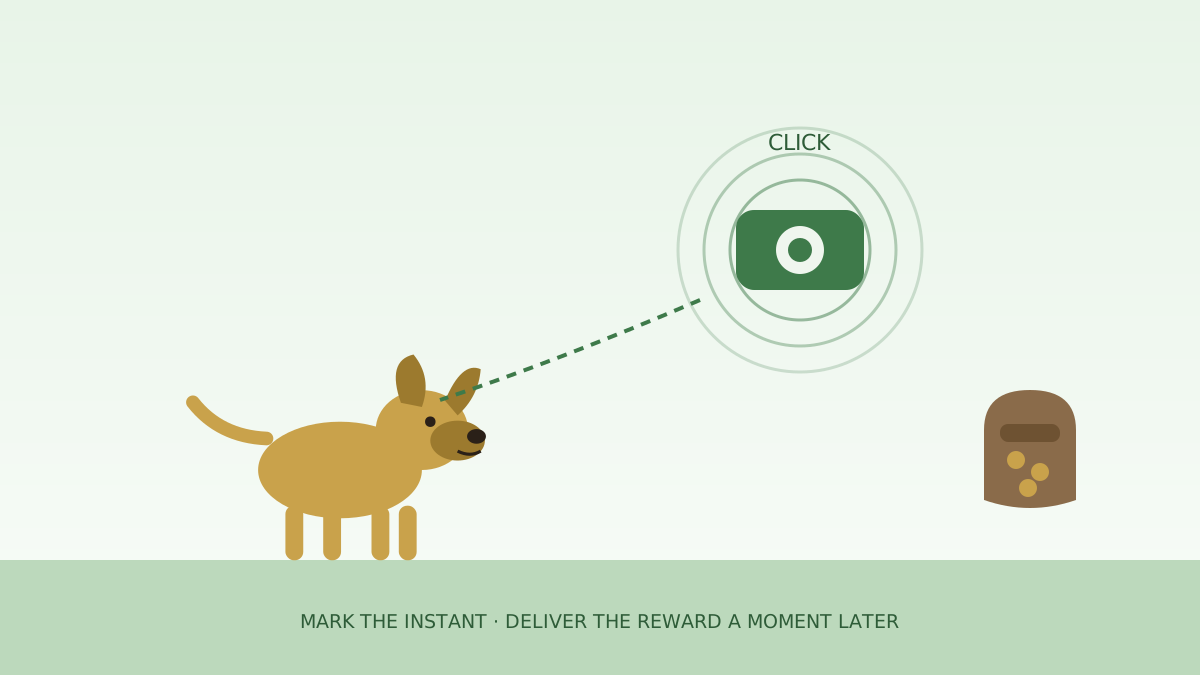
The marker does the teaching
A clicker, or a short spoken word used identically every time, is a stopwatch button. Pressed at the exact instant the rear end touches the floor, it isolates that moment out of a stream of movement. Without a marker, a treat delivered three seconds later may reward standing up again, looking away, or stepping forward — and the dog will diligently learn whichever of those it was doing when the food arrived.
Charge it first
Before the marker means anything, pair it with food twenty or thirty times: click, treat, click, treat, doing nothing else. Once the animal snaps its head towards you at the sound, the marker has become information rather than noise, and training can begin.
Raise one criterion at a time
Trainers talk about the three D's — duration, distance, distraction. The rule is to increase only one of them at a time. A dog that holds a sit for thirty seconds in a quiet kitchen has not learned to hold it for five seconds in a park; adding distraction means dropping duration back to almost nothing and building again. Trying to add all three simultaneously is the single most common reason a behaviour "falls apart outside".
Short sessions, high rate
Two minutes with twenty rewards teaches more than fifteen minutes with six. Keep sessions brief enough that the animal is still keen when you stop, and end while it is still winning. A session that finishes in confusion is a session the animal remembers as unpleasant.
What punishment actually costs
Suppressing a behaviour with intimidation may stop it in the moment, but it teaches the animal that the situation — or the person — predicts something unpleasant. Warning signals such as growling are especially costly to punish, because removing the warning does not remove the feeling underneath it. Modern professional bodies favour reward-based methods for exactly this reason: they are effective and they do not damage the relationship the training depends on.
A realistic first week
- Charge the marker.
- Teach a hand target — nose to palm. It is easy, fast, and becomes a way to move an animal without pulling it.
- Reward the name every time it produces a head turn, and never use it for anything unpleasant.
- Capture calmness: reward the animal for lying down quietly when you did not ask.
Fading the food without losing the behaviour
The fear that stops most owners is that the dog will only work for food. That happens, but not because food was used — it happens because the food was always visible, always in the same hand, and always delivered on the same schedule.
Three changes prevent it. Keep the food out of sight before the cue: a hand in a pocket, a pouch behind the hip, food on a shelf across the room. A dog that has to perform before it sees anything learns that the cue predicts the reward, not that the hand does. Then vary what arrives — sometimes food, sometimes the lead clipped on for a walk, sometimes the door opening, sometimes a thrown toy. Life is full of things a dog wants, and most of them are free. Finally, once a behaviour is reliable, stop paying every repetition. Pay two out of three, then one out of three, unpredictably. A behaviour reinforced on a variable schedule is markedly more durable than one that has always been paid.
What should not fade is the marker. It costs nothing, it stays accurate for years, and it is what keeps the dog able to learn something new next month.
Frequently Asked Questions
What is a marker or clicker?
A short, consistent sound made at the exact instant the animal does the right thing. It tells the animal precisely which action earned the reward that follows.
How soon must a reward arrive?
The marker must be immediate — within about a second. The treat can follow a moment later, because the marker has already identified the behaviour.
Do I have to use treats forever?
No. Once a behaviour is reliable, rewards move to a variable schedule and increasingly come from life itself: the door opening, the lead going on, the ball being thrown.
Do I need a clicker, or is a word enough?
A word works, provided it is short, said the same way every time, and used for nothing else. A clicker is more consistent because it sounds identical regardless of your mood, which matters when precision is the point — but consistency beats equipment.
How long should a training session be?
Two to five minutes, several times a day, beats one twenty-minute session. Stop while the dog is still succeeding. Sessions that run until the dog is bored teach it that training ends in frustration.
Sources & Further Reading
- Association of Professional Dog Trainers — apdt.com
- Pet Professional Guild — force-free training resources — www.petprofessionalguild.com
Last updated: 10 August 2026